Choosing a mixer for a high-viscosity adhesive is not as simple as matching one viscosity number to one machine.
You may know that your finished adhesive has a viscosity of a certain value, but that number tells only part of the story. During production, the material may become much thicker when fillers are added, behave differently under shear, trap air during dispersion, or stop flowing well before the batch is complete. The most difficult stage of the process—not necessarily the final viscosity—can determine what mixing equipment you need.
For that reason, selecting a high viscosity adhesive mixer should start with the behavior of your formulation throughout the entire production cycle.
You need to consider viscosity profile, rheology, shear requirement, filler loading, temperature, vacuum, discharge and scale-up. Industrial adhesive mixing references likewise identify viscosity profile and shear input as primary equipment-selection factors rather than treating viscosity as a single isolated number.
This guide shows you how to evaluate those factors and decide whether a multi-shaft mixer, double planetary mixer or a planetary system with additional dispersion capability is the better starting point for your process.
Start With the Adhesive Process, Not the Mixer Model
A common mistake is to contact an equipment manufacturer with only two pieces of information:
“We produce epoxy adhesive. Final viscosity: X.”
That is not enough for reliable mixer selection.
Map the Full Viscosity Profile
Your adhesive can pass through several very different physical states during one batch.
For example:
Base resin → powder addition → filler wetting → peak viscosity → final mixing → let-down → finished adhesive
The finished product may flow reasonably well, while the intermediate batch becomes extremely difficult to move after a large quantity of filler is introduced.
That intermediate condition matters.
Technical guidance for structural adhesives specifically notes that some formulations experience very high viscosity peaks during processing and may therefore require planetary-style mixing even when the final product does not tell the whole story.
Should you choose an adhesive mixer based only on final viscosity?
No. You should identify the viscosity range across the entire process and pay particular attention to the stage where the batch becomes hardest to circulate, disperse or knead.
Identify the Hardest Stage of the Batch
Ask yourself:
- When does the material become hardest to move?
- When are powders or fillers added?
- Does viscosity rise during reaction?
- Does cooling make the product significantly thicker?
- Is there a let-down stage near the end?
- Does the batch remain flowable after mixing?
This approach changes the question from:
“How viscous is my adhesive?”
to:
“What must the mixer accomplish at the most demanding stage of my process?”
That is a much more useful starting point.
Use the V-R-S-P Framework Before Comparing Mixers
Before comparing equipment models, evaluate four variables:
V — Viscosity Profile
R — Rheology
S — Shear Requirement
P — Process Requirements
Together, these provide a more practical basis for choosing a high viscosity adhesive mixer than viscosity alone.
V — Viscosity Profile
Start with the lowest, normal and highest viscosity conditions during production.
The key number is not always the viscosity stated on the finished-product specification. The mixer must continue operating effectively when your material is at its most difficult stage.
If filler addition temporarily changes a flowing resin into a heavy paste, your mixing equipment must be selected for that stage.
R — Rheology
Two adhesives can have similar measured viscosities and still behave very differently inside a vessel.
Many adhesives exhibit non-Newtonian behavior. Their apparent viscosity may change when shear is applied. Some are shear-thinning; others develop a yield stress or show thixotropic behavior.
You do not need an advanced rheology model before speaking with a mixer manufacturer. However, you should know whether the product becomes easier to move under shear, tends to hold its shape at rest, or changes significantly during processing.
That information affects agitator design and material turnover.
What is more important than a single viscosity value?
Your material’s behavior under actual processing conditions. Viscosity profile and required shear are repeatedly identified as major selection variables in industrial adhesive mixing.
S — Shear Requirement
High viscosity does not automatically mean maximum shear.
Your process may need high shear to wet and disperse powders, break agglomerates or create a uniform suspension. However, another formulation may mainly need strong bulk movement with controlled shear.
This distinction matters.
A high-speed disperser has a relatively concentrated zone of influence when material becomes very viscous. Adding a low-speed sweep or anchor can improve bulk circulation by continually feeding material toward the high-speed mixing zone.
So ask:
Do you need more shear, or do you need better material turnover?
Those are not always the same problem.
P — Process Requirements
Finally, look beyond the agitator itself.
Your adhesive mixing equipment may also need to handle:
- high filler loading;
- vacuum deaeration;
- heating or cooling;
- controlled powder addition;
- reaction-sensitive materials;
- difficult discharge;
- frequent product changeovers;
- laboratory-to-production scale-up.
These requirements often determine the final equipment configuration.
Which Mixer Type Fits a High-Viscosity Adhesive?
There is no single best mixer for every high-viscosity adhesive.
Instead, you need to match the mixing mechanism to the way your batch moves and the work that must be performed.
Double-Shaft or Multi-Shaft Mixer
A multi-shaft mixer typically combines different agitators with different jobs.
For example, a low-speed anchor or sweep can move and fold the bulk material while a high-speed disperser provides the shear required for powder wetting, dispersion or dissolution.
This configuration is useful when your formulation still has enough mobility for an anchor or sweep to establish productive bulk circulation.
Multi-shaft systems are widely used for viscous adhesives because they combine high-shear agitation with low-speed bulk movement.
When is a multi-shaft mixer a good choice?
Consider it when you need both bulk circulation and high-speed dispersion and the adhesive remains sufficiently mobile for the low-speed agitator to continuously feed material through the high-shear zone.
This can be useful for resin-and-filler processes, sealants and other formulations where dispersion is a significant production objective.
Double Planetary Mixer
A double planetary mixer for adhesives works differently.
Instead of relying on an agitator that remains in one fixed position, planetary agitators rotate on their own axes while also moving around the vessel. This allows them to continually enter new regions of the batch.
That movement becomes particularly useful when the material is very viscous, paste-like or no longer flows readily around a conventional agitator.
Industrial adhesive mixing references describe double planetary systems as suitable for formulations involving very viscous materials, kneading and substantial changes in viscosity during the batch.
When should you consider a double planetary mixer?
It becomes a strong candidate when your primary challenge is moving, folding and kneading a highly viscous or poorly flowing batch rather than generating intense high-speed dispersion alone.
Planetary Mixing With High-Speed Dispersion
Some formulations create a harder selection problem.
You may need the turnover capability of planetary mixing and strong dispersion for large amounts of filler.
In that situation, a planetary configuration with an additional high-speed disperser can combine both functions. Industrial planetary disperser designs use independently controlled planetary agitation and high-speed dispersion so that flow and shear can be adjusted as product rheology changes.
This can be especially relevant when a heavily filled adhesive becomes too difficult for conventional bulk circulation but still requires intensive powder incorporation.
A practical comparison looks like this:
| Mixing Requirement | Multi-Shaft Mixer | Double Planetary Mixer | Planetary + High-Speed Disperser |
|---|---|---|---|
| Bulk movement | Strong while material remains movable | Strong for poorly flowing material | Strong |
| High-shear dispersion | Strong | Depends on configuration | Strong |
| Very high viscosity / poor flow | Conditional | Strong fit | Strong fit |
| Heavy filler incorporation | Good | Depends on dispersion need | Very good |
| Vacuum operation | Configurable | Common configuration | Configurable |
| Main selection driver | Flow + dispersion | Turnover + kneading | Turnover + intensive dispersion |
This table is intentionally not based on a universal cP cutoff.
Actual equipment capability depends on formulation rheology, agitator geometry, torque, vessel size, batch conditions and the manufacturer’s machine design.
Match the Mixer to the Adhesive Formulation
The chemistry of the adhesive gives you useful clues, but you should still select the machine according to the actual process.
Highly Filled Epoxy Adhesives
Highly filled epoxy systems can create two problems at the same time:
high viscosity and difficult dispersion.
As filler content increases, you may need strong material turnover to keep the batch moving while also applying enough shear to wet and distribute solids.
Entrapped air can become another concern.
Industrial mixing guidance for filled epoxy and encapsulation materials therefore considers dispersion, viscosity behavior, vacuum processing and temperature control together rather than as separate issues.
If your epoxy formulation contains substantial filler, do not ask only:
“Can this mixer handle my viscosity?”
Also ask:
“Can it incorporate and disperse my filler at the point where the batch is thickest?”
Silicone Adhesives and Sealants
Silicone sealants can become particularly difficult during filler incorporation.
Silica and other solids may increase viscosity substantially while also requiring effective wetting and distribution. Depending on the formulation, trapped air may need to be removed before discharge or filling.
That means your silicone adhesive mixer may need a combination of strong turnover, suitable dispersion and vacuum capability rather than simply a larger motor.
Planetary and multi-shaft technologies are both used across silicone and RTV-type applications, with the correct choice depending on formulation and processing objectives.
Polyurethane Adhesives
Polyurethane requires more caution because “PU adhesive” describes many different formulation types.
Some reactive polyurethane systems contain isocyanate components that must be protected from moisture during storage and processing. By contrast, some waterborne polyurethane adhesive formulations can be mixed without high shear and have their own temperature limitations.
Therefore, you should not assume that every polyurethane adhesive needs the same mixer configuration.
Instead, specify:
- whether the system is reactive;
- whether moisture control matters;
- temperature limits;
- solids content;
- shear requirement;
- pot life or process-time constraints.
Your mixer should fit the actual polyurethane formulation, not the chemistry label alone.
Do Not Choose the Mixer Without Checking the Complete Process
The mixing vessel is only one part of a successful adhesive production process.
Vacuum Deaeration
Do high-viscosity adhesives need vacuum mixing?
Not always.
However, vacuum becomes important when aggressive mixing introduces air, trapped bubbles affect product quality, or downstream deaeration is difficult.
Processing an adhesive under vacuum can limit air incorporation, while the equipment configuration itself affects how efficiently the batch moves during vacuum operation.
So determine your vacuum requirement before the machine is finalized.
Do not treat it as an accessory that can always be added later.
Heating and Cooling
Temperature changes both the process and the material.
You may use heating to reduce viscosity, melt ingredients or support a reaction. In other cases, you may need cooling because shear, reaction or long cycle times increase batch temperature.
Low-speed sweeps and wall scrapers can also contribute to heat transfer by continually moving material near the vessel surface.
For this reason, define your acceptable processing temperature and heating or cooling requirements during mixer selection.
Discharge and Transfer
There is another question that is often asked too late:
If the adhesive does not flow after mixing, how will you get it out of the vessel?
Very viscous finished products may discharge too slowly under gravity. Pressure- or platen-assisted discharge systems are therefore used with some high-viscosity adhesive processes to improve material transfer and reduce residual product.
Your production flow should therefore be evaluated as:
Mix → Deaerate → Discharge → Transfer → Fill
not simply:
Mix → Finish.
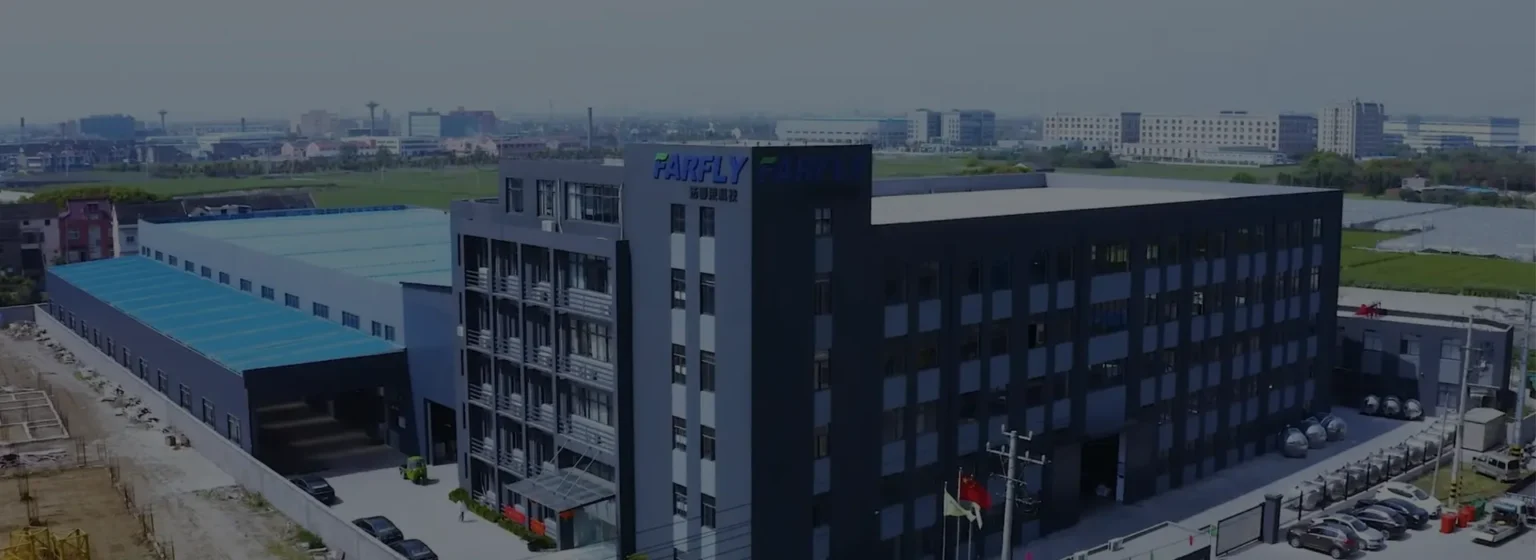
FARFLY also offers hydraulic discharge equipment designed to work with high-viscosity mixing systems for extrusion, transfer and filling applications.
Avoid These Common Mixer Selection Mistakes
Choosing Only by Final Viscosity
The finished adhesive may not represent the hardest part of the batch.
Always identify your peak viscosity and the stage where it occurs.
Assuming Higher Shear Is Always Better
High shear is useful when you need dispersion, wetting or particle-size reduction.
But if your main problem is poor bulk movement, simply increasing high-speed mixing may not solve it.
Looking Only at Motor Power
A large motor does not automatically create good mixing.
Agitator geometry, torque, flow pattern, vessel dimensions and interaction between multiple agitators all matter.
Ignoring Discharge Until the Mixer Is Installed
A machine that mixes the adhesive successfully can still create a production bottleneck if the finished product takes too long to leave the vessel.
Choose mixing and discharge as parts of the same process.
Scaling Up Only by Vessel Volume
A successful laboratory batch does not automatically mean that multiplying the vessel size will reproduce the same result.
Shear, turnover, heat transfer, powder incorporation and cycle time can all change during scale-up. Laboratory and pilot equipment are commonly used to develop and validate high-viscosity processes before full production.
What Information Should You Give a Mixer Manufacturer?
A good equipment recommendation requires more than an adhesive name.
Before requesting a mixer configuration, prepare the following information.
Material data
- adhesive chemistry;
- raw materials;
- final viscosity;
- estimated peak viscosity;
- rheological behavior;
- filler or solids loading;
- shear sensitivity.
Process data
- batch volume;
- raw-material addition sequence;
- required mixing result;
- operating temperature;
- heating or cooling requirement;
- vacuum requirement;
- target batch time.
Handling data
- expected final flow behavior;
- discharge method;
- downstream transfer or filling;
- cleaning and changeover requirements.
What information does a mixer manufacturer need most?
The manufacturer needs enough information to understand the most difficult stage of your production process. A viscosity number by itself cannot describe filler dispersion, air removal, temperature limits or discharge behavior.
Choose the Mixer Around the Process, Not the Nameplate
There is no universal high viscosity adhesive mixer that is best for every epoxy, silicone, polyurethane or structural adhesive.
Start with the complete process.
Map the viscosity profile and identify the peak. Understand how the adhesive behaves under shear. Separate your need for bulk movement from your need for dispersion. Then evaluate filler loading, vacuum, temperature control, discharge and scale-up.
Only after that should you compare mixer configurations.
If your batch remains mobile but needs strong dispersion, a multi-shaft system may be appropriate. If the formulation becomes a very viscous, poorly flowing mass, a double planetary mixer may offer better turnover. If you need both planetary movement and intensive filler dispersion, a combined planetary and high-speed dispersion configuration may be more suitable. The final choice should still be evaluated against your actual formulation and production conditions.
FARFLY currently offers double-shaft and double-planetary mixing configurations with options such as vacuum processing, planetary agitation, high-speed dispersion and temperature control, as well as equipment for hydraulic discharge of high-viscosity materials.
When you are ready to evaluate a system, prepare your adhesive type, viscosity profile, filler loading, batch size, temperature, vacuum and discharge requirements. Those process conditions provide a much stronger basis for configuring the right adhesive mixing equipment than a viscosity number alone.